
Supporting Isolated & Remote Employees: Solutions for Workplace Loneliness
February 7, 2025 |  Chaplain ServicesGeneralMental health
Summary
Loneliness in the workplace is a growing challenge, affecting employees across industries and geographies. This issue is particularly challenging for remote workers and those in roles with little interpersonal interaction. Left unaddressed, loneliness can significantly impact employee well-being, engagement, and retention, creating ripple effects that undermine organizational success.Fortunately, employers have the tools and opportunities to tackle this challenge. Through proactive strategies, including chaplaincy services, businesses can create connected and supportive environments, allowing employees to thrive personally and professionally.
Highlights
- Key Challenge: Workplace loneliness affects employee well-being, engagement, and retention.
- Vulnerable Groups: Remote employees and younger workers experience the highest levels of workplace loneliness.
- Employer Solutions: Chaplaincy services, mental health support, and intentional communication.
- Organizational Benefits: Reduced burnout, improved retention, and stronger team collaboration.
 The Growing Crisis of Loneliness at Work
According to a Gallup survey, 1 in 5 employees worldwide reports feeling lonely at work. This issue is even more pronounced among younger employees and those working remotely. Remote workers who lack daily face-to-face interactions are particularly vulnerable to disconnection and isolation. Similarly, younger workers often report difficulty establishing relationships and a sense of belonging in professional environments.
 A U.S. News report reveals that:
- 45% of workers aged 18 to 25 feel lonely at work.
- 33% of workers aged 26 to 43 report workplace loneliness.
- Just 15% of workers aged 58 to 64 feel lonely at work.
The consequences of workplace loneliness extend beyond emotional distress. Research indicates that loneliness contributes to:
- Increased burnout rates due to the absence of emotional support networks.
- Higher turnover, with lonely employees more likely to seek opportunities elsewhere.
- Reduced productivity and engagement, as isolation diminishes motivation and collaboration.
For businesses, these outcomes underscore the urgency of addressing workplace loneliness as a critical organizational priority.
 Practical Solutions for Employers
Employers play a vital role in addressing workplace loneliness. Offering employee wellness services as part of a comprehensive strategy can help employees feel supported and engaged. By creating an environment that prioritizes connection and well-being, businesses can mitigate the effects of isolation and disengagement. Here are actionable strategies:
Create Dedicated Connection Opportunities for Remote Workers
Intentionally fostering relationships among remote employees helps them feel like valued members of the team.
- Rotate meeting hosts among remote employees to ensure everyone feels included in team discussions.
- Pair remote employees with “work partners” for informal check-ins or virtual coworking sessions.
Targeted efforts to engage remote workers can help reduce isolation and strengthen team dynamics.
Provide Access to Mental Health Resources
Offering mental health resources demonstrates an employer’s commitment to holistic employee care, addressing the root causes of loneliness.
- Include workplace chaplaincy services as part of a broader mental health initiative, emphasizing emotional and spiritual care.
- Partner with Employee Assistance Programs (EAPs) to provide confidential counseling and mental health support.
- Share curated resources like webinars, articles, or podcasts on mental health and well-being.
Comprehensive mental health support empowers employees to address loneliness and other challenges, improving workplace culture.
Conduct Regular Employee Surveys
Gaining insight into employees’ experiences and feelings of loneliness can help employers tailor solutions to meet specific needs.
- Use anonymous surveys to ask employees about their sense of connection and support at work.
- Include open-ended questions to allow employees to share feedback or suggestions for improvement.
- Act on survey results by implementing changes or addressing concerns raised by employees.
Regular surveys demonstrate that leadership values employee feedback and is committed to improving workplace culture.
Promote Regular Communication
Open and frequent communication can bridge the gap for remote and solitary employees. Employers can:
- Schedule regular one-on-one check-ins between managers and employees.
- Use video conferencing tools to create opportunities for face-to-face interaction.
- Encourage employees to share updates, ideas, or personal milestones to maintain a sense of connection.
These actions can enhance employee engagement, reduce feelings of isolation, and improve overall team cohesion, leading to increased productivity and a stronger organizational culture.
 How Chaplains Provide a Safe Space for Lonely Employees
One of the most effective ways to support employees experiencing loneliness is through chaplaincy programs. Workplace chaplains create a safe, judgment-free environment for employees to express their struggles, whether they stem from personal challenges or professional isolation.
Addressing Personal Loneliness
For many employees, loneliness at work is compounded by personal struggles, such as grief, family challenges, or financial insecurity. Chaplains provide holistic care that addresses:
- Emotional and spiritual well-being.
- Strategies for navigating personal and professional challenges.
- Resources or referrals for additional support when needed.
Building Relationships in Solitary Roles
Employees in solitary roles—such as logistics, manufacturing, or security—often lack opportunities for meaningful interactions. Chaplains offer:
- On-site or scheduled support sessions to reduce feelings of isolation.
- Encouragement to find meaning in their roles through personal reflection.
- Connection-building strategies to fit the work environment through in-person or technology-based communication tools.
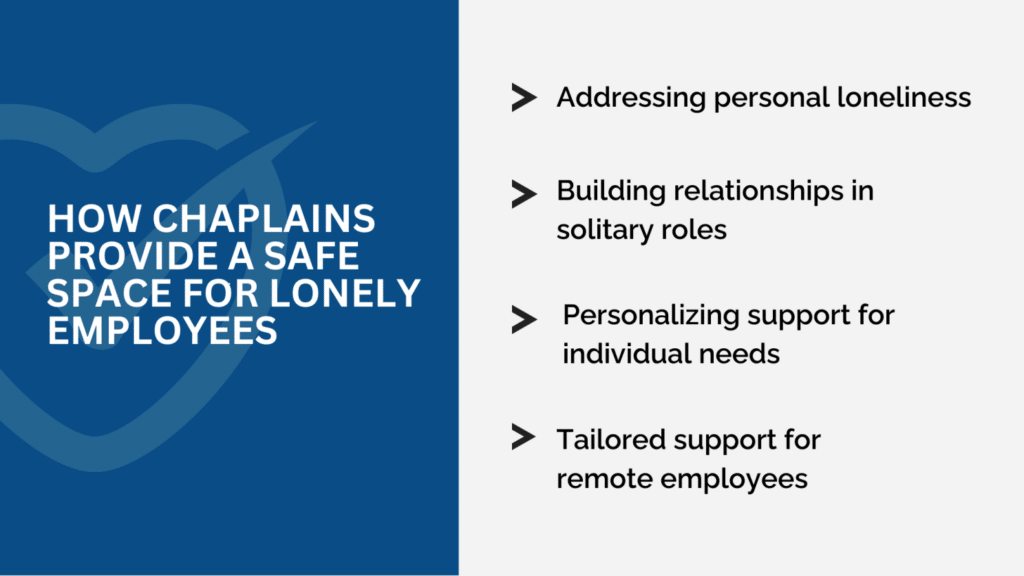 Personalizing Support for Individual Needs
Chaplains tailor their support to the unique needs of each employee, ensuring personalized care that addresses their specific challenges.
- Take time to understand the individual circumstances of each employee, from personal struggles to professional stressors.
- Offer targeted support, resources, or referrals based on the employee’s situation, such as connecting them with mental health services or community groups.
- Follow up regularly to ensure the employee feels consistently supported.
 The Benefits of Addressing Workplace Loneliness
When organizations prioritize solutions like workplace chaplaincy and faith-based employee support, the business benefits are profound, leading to:
- Higher Retention: Employees who feel supported are less likely to leave.
- Improved Engagement: Connected employees contribute more effectively to their teams.
- Stronger Collaboration: Teams that prioritize trust innovate and perform better.
Conclusion
Workplace loneliness is a quiet crisis – but it doesn’t have to be. By incorporating chaplain services and prioritizing employee mental health support, businesses can create thriving, resilient teams where employees feel connected, seen, and valued.
Employers have the resources to create environments where employees thrive emotionally and professionally. By introducing chaplaincy programs, encouraging open communication, and promoting a culture of belonging, businesses can improve employee well-being and build strong, engaged teams.
Recommended Post
5 Ways to Support Employees Who Suffer from Depression
August 28, 2019 | General
In the workplace, the well-being of your employees matters. Often, this is addressed with business goals about physical wellbeing. However, health doesn’t just extend to the physical aspect. Your co...
Read More